
Artificial intelligence is moving fast, but infrastructure often struggles to keep up. That is why Microsoft’s latest announcement feels different. Maia 200 is not just another AI chip release. It is a clear statement about where real world AI performance is heading next.
If you care about faster AI responses, lower costs, and more efficient cloud computing, this update is worth your attention. Maia 200 The AI accelerator built for inference is designed for the exact moment the AI industry finds itself in right now.
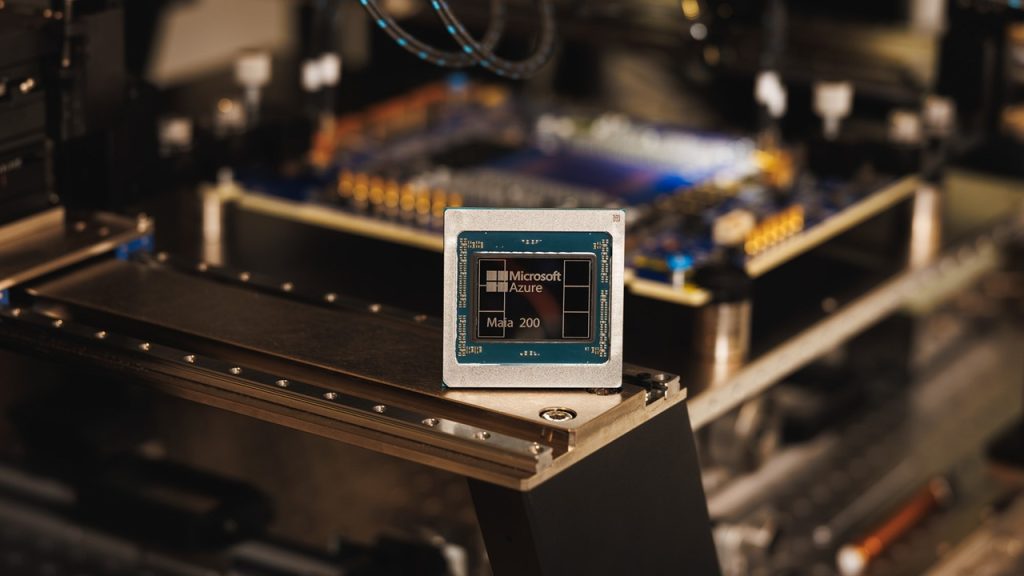
What Is Maia 200 and Why It Matters
Maia 200 is Microsoft’s second generation custom AI accelerator, purpose built to handle AI inference at massive scale. Inference is the stage where trained AI models actually respond to users in real time. This includes chatbots, copilots, image generation, code assistants, and enterprise AI tools.
Unlike general purpose chips, Maia 200 is optimized specifically for inference workloads that demand speed, efficiency, and predictable performance. Microsoft designed it to run inside its Azure data centers and power services that millions of people already use daily.
This is important because inference now dominates AI usage. Training happens occasionally. Inference happens constantly.
Built for Inference First and That Changes Everything
Most AI accelerators try to balance training and inference. Maia 200 does not. Microsoft made a deliberate choice to focus on inference and it shows in the architecture.
Some standout design priorities include
• High throughput for real time AI responses
• Lower power consumption per request
• Optimized memory bandwidth for large language models
• Tighter integration with Azure AI infrastructure
This means Maia 200 can deliver faster responses while consuming less energy. For cloud customers, that translates into better performance and potentially lower costs.
From an environmental perspective, efficiency matters more than ever. Microsoft has publicly committed to sustainability goals, and inference optimized silicon helps reduce the energy footprint of AI at scale.
How Maia 200 Fits Into Microsoft’s Bigger AI Strategy
Maia 200 is not an isolated project. It fits into a much larger strategy that Microsoft has been quietly building over the past few years.
Microsoft already controls
• The cloud platform through Azure
• The software layer through Windows, Office, and GitHub
• The AI services layer through Copilot and Azure OpenAI
Now it is tightening its grip on the hardware layer too.
By developing Maia 200 in house, Microsoft reduces reliance on external chipmakers and gains more control over performance tuning. This vertical integration mirrors what companies like Apple have done successfully, but now applied to cloud scale AI.
This is also Microsoft’s answer to competitive pressure from Google and Amazon, both of which have invested heavily in custom AI chips for their clouds.
Real World Impact for Developers and Businesses
For developers, Maia 200 could quietly improve the experience without requiring major changes. AI applications hosted on Azure can benefit from faster inference and more consistent performance without rewriting code.
For businesses, the benefits are more tangible
• Faster AI powered customer support
• More responsive copilots inside productivity tools
• Improved reliability during peak usage
• Better cost predictability for AI workloads
In short, Maia 200 makes AI feel less experimental and more dependable.
That matters when enterprises are deciding whether to fully commit to AI driven workflows.
A Serious Challenger in the AI Chip Race
The AI accelerator market is getting crowded. Nvidia still dominates. Google has its TPU. Amazon has Trainium and Inferentia.
Maia 200 enters this race with a clear advantage. It is deeply integrated into Azure and tightly aligned with Microsoft’s AI software stack.
This approach allows Microsoft to optimize everything end to end. Hardware, compilers, runtime systems, and AI services all work together.
You can see echoes of this philosophy in Microsoft’s public engineering culture. The company increasingly focuses on long term platforms rather than one off products.
If you want a deeper technical perspective on AI hardware trends, resources like provide excellent background on how inference focused accelerators are reshaping computing.
Why This Launch Feels Different
What makes Maia 200 stand out is timing.
AI adoption is no longer speculative. It is operational. Companies expect AI to respond instantly and reliably. Latency is no longer acceptable. Costs are under scrutiny.
Maia 200 feels like Microsoft acknowledging that reality.
Instead of chasing raw training benchmarks, Microsoft is optimizing for the everyday experience of AI users. That is a smart and pragmatic move.
It also signals confidence. Microsoft is betting that inference performance will be the defining metric of AI platforms moving forward.
What This Means for the Future of AI on Azure
Looking ahead, Maia 200 opens the door to more specialized AI infrastructure from Microsoft.
We can reasonably expect
• More custom accelerators targeting specific AI tasks
• Deeper optimization between hardware and Copilot services
• Faster rollout of advanced AI features inside Azure
• Stronger competition that benefits cloud customers
This is the kind of behind the scenes innovation that rarely grabs headlines but shapes the user experience in lasting ways.
Final Thoughts
Maia 200 The AI accelerator built for inference is not about flashy specs. It is about maturity. Microsoft is treating AI as critical infrastructure, not an experiment.
If you rely on Azure or use AI powered tools daily, this update is a quiet but meaningful win. Faster responses, better efficiency, and a cloud platform that feels more purpose built for the AI era.
You may not see Maia 200 directly, but you will feel it in every smarter, faster interaction that follows.