
China is preparing for a bold leap that could reshape how the world thinks about artificial intelligence, space infrastructure, and global technology power. The country is not just talking about rockets or satellites anymore. It is now planning to move AI data centres into space, a decision that feels futuristic, risky, and quietly game changing.
If you follow space technology or global tech competition, you will love this update. What China is attempting goes far beyond science fiction and signals a serious shift in how digital power may be built in the coming decade.
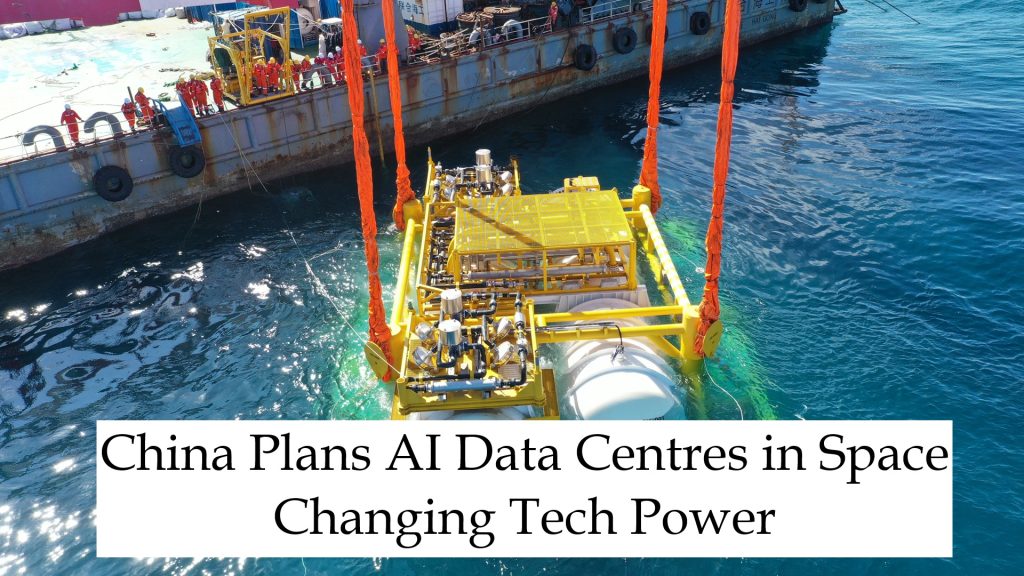
Why China Wants AI Data Centres in Space
At first glance, putting AI data centres in orbit sounds extreme. On Earth, data centres already consume massive electricity, water, and land resources. China is facing rising energy demands driven by cloud computing, generative AI, and national digital infrastructure goals.
By moving AI workloads into space, China sees an opportunity to bypass many of these limits.
Here is the core idea in simple terms
Satellites equipped with advanced computing systems would process data directly in orbit instead of sending everything back to Earth. This could dramatically reduce latency for space based services and lower dependence on ground based infrastructure.
China believes space based AI can help solve three major challenges
• Power consumption on Earth
• Data transmission delays
• Strategic dependence on terrestrial networks
This vision also fits neatly into China’s long term plan to dominate emerging technologies, especially where space and artificial intelligence intersect.
What Makes Space Based AI Different
Traditional satellites mostly collect data and transmit it to Earth. China wants to change that model completely.
In the proposed system, AI data centres in space would
• Process satellite imagery in real time
• Run complex AI models directly in orbit
• Filter and analyze data before sending results to Earth
This approach could benefit weather forecasting, climate monitoring, disaster response, navigation systems, and military intelligence.
The real breakthrough is on orbit computing. Instead of waiting minutes or hours for data to be processed on Earth, decisions could be made almost instantly.
China is not alone in exploring edge computing in space, but it is the first major power openly discussing large scale AI data centres beyond Earth.
A New Phase in the Space Race
This move places China in direct competition with the United States and private players like SpaceX. While companies in the US focus heavily on launch systems and satellite internet, China is looking at space as a digital infrastructure layer.
Recent statements from Chinese officials suggest the country views space not only as a frontier for exploration but as a platform for
• Cloud computing
• Artificial intelligence
• Data storage and processing
China has also pledged to develop space tourism and push deeper into planetary exploration. Together, these goals reveal a long term strategy rather than isolated experiments.
It is not hard to see why analysts describe this as a new space race. This time, the prize is not just the Moon or Mars but control over future digital ecosystems.
How This Challenges Existing Power Structures
Moving AI infrastructure into space could reduce reliance on undersea cables, land based data hubs, and even national borders. That has serious geopolitical implications.
If China succeeds, it could
• Control faster space based data networks
• Offer AI services independent of terrestrial constraints
• Strengthen digital sovereignty
For countries that depend heavily on Earth based infrastructure, this raises uncomfortable questions about access, regulation, and security.
From a strategic perspective, space based AI could also support defense and surveillance systems. While China has not framed this initiative as military focused, experts agree the dual use potential is impossible to ignore.
The Technology Hurdles China Must Overcome
This plan is ambitious, and ambition alone does not guarantee success.
Some of the biggest challenges include
• Cooling high performance computing systems in space
• Protecting hardware from radiation
• Maintaining and upgrading orbiting data centres
• Managing enormous launch and deployment costs
Unlike Earth based facilities, repairs in orbit are complex and expensive. Even small hardware failures could become major problems.
That said, China has already demonstrated strong capabilities in satellite deployment, space stations, and long duration missions. The country’s steady progress suggests these challenges are being taken seriously.
Why Energy Is the Hidden Motivation
One of the most overlooked aspects of this plan is energy.
AI data centres on Earth are power hungry. They strain electrical grids and increase carbon emissions. In space, solar energy is abundant and uninterrupted.
China sees space as a cleaner long term solution for scaling AI infrastructure. Solar powered AI platforms could run continuously without competing with civilian electricity needs on Earth.
This idea aligns with global conversations about sustainable computing. Agencies like NASA have also explored energy efficient space technologies, highlighting the broader relevance of this direction. You can learn more about space power research on the official NASA website
What This Means for the Global AI Ecosystem
If China pulls this off, the ripple effects will be enormous.
We could see
• Faster global AI services powered from orbit
• New standards for space based cloud computing
• Increased pressure on other nations to respond
For tech companies, this could open entirely new markets. For governments, it could redefine digital security and sovereignty.
From a user perspective, many benefits would be invisible but impactful. Better navigation accuracy, faster satellite internet, improved climate monitoring, and more responsive emergency systems could all emerge from space based AI.
A Personal Take on China’s Space AI Vision
There is something both exciting and unsettling about this development.
On one hand, you cannot help but admire the scale of China’s thinking. This is not a minor upgrade. It is a reimagining of where intelligence lives and how it moves.
On the other hand, it raises questions about transparency, control, and balance of power. When AI leaves Earth, governance becomes far more complicated.
Still, innovation has always come from bold risks. Whether China’s space based AI dream becomes a new standard or a costly experiment, it will shape the conversation for years to come.
What to Watch Next
The next few years will be crucial. Watch for
• Test launches of AI enabled satellites
• International responses from the US and allies
• New policies on space based computing
China is clearly signaling that the future of AI is not limited to Earth. If this plan advances as expected, the digital world may soon extend far beyond our planet.
Conclusion
China’s plan to deploy AI data centres in space marks a turning point in both artificial intelligence and space strategy. It blends ambition, technology, and geopolitics into a single bold vision.
Whether you are a tech enthusiast, investor, or policy watcher, this is one story worth following closely. The future of AI may not be built only on land or in the cloud. It may be orbiting above us.