What is Deepnote?
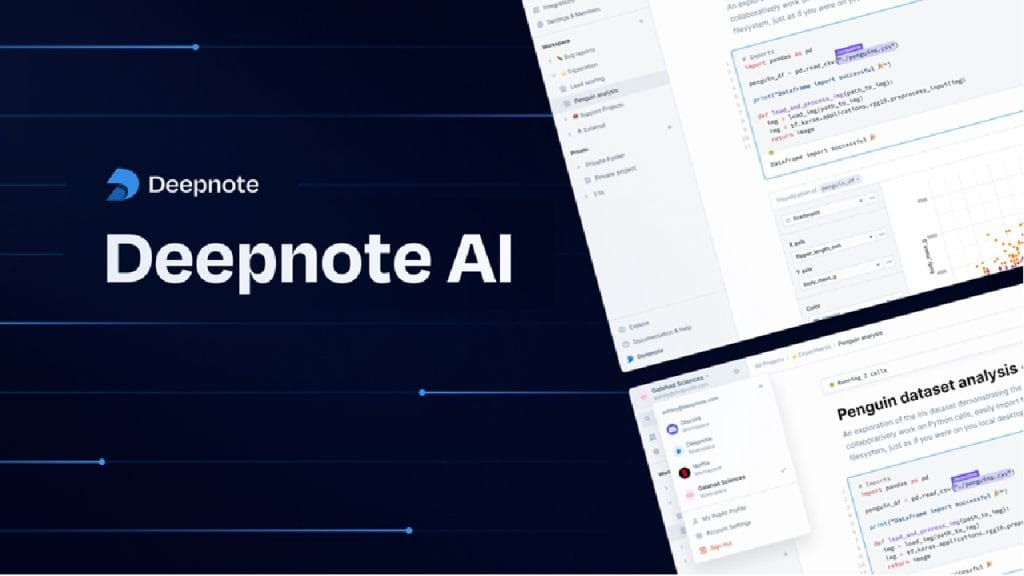
Deepnote is an innovative data science notebook platform designed to streamline collaborative data analysis and machine learning projects. Unlike traditional Jupyter notebooks, Deepnote offers real-time collaboration, making it easier for teams to work together seamlessly. Whether you’re a data scientist, analyst, or developer, this tool helps you organize, share, and execute complex data workflows without the hassle of managing infrastructure. It addresses common challenges like version control, collaboration bottlenecks, and deployment hurdles, empowering users to focus on insights rather than technical setup.
Key Features
- Real-time Collaboration: Multiple users can work on the same notebook simultaneously, seeing each other’s updates live.
- Integrated Data Connectors: Seamlessly connect to databases, cloud storage, and APIs for easy data access.
- Version Control & History: Keep track of changes and revert to previous versions effortlessly.
- Multi-language Support: Support for Python, R, SQL, and more, enabling diverse workflows.
- Cloud-Based Platform: No installation needed—access your projects from anywhere with an internet connection.
✅ Pros
- Collaborative Environment: Facilitates teamwork with real-time editing and commenting.
- User-Friendly Interface: Intuitive design makes it accessible for beginners and experienced users alike.
- Integration Capabilities: Connects easily with popular data tools and cloud services.
- Secure and Scalable: Ensures data privacy with robust security measures while scaling with your needs.
❌ Cons
- Learning Curve for Beginners: Although user-friendly, new users might need time to adapt to advanced features.
- Limited Offline Access: Primarily cloud-based, which might be restrictive in low-connectivity environments.
- Pricing Tiers: Some advanced features are locked behind paid plans, which could be a barrier for small teams or startups.
Who is Using Deepnote?
Primary Users
Deepnote is primarily used by data scientists, analytics teams, machine learning engineers, and research professionals. Its collaborative nature makes it particularly appealing to teams working on complex data projects across various industries.
Use Cases
- Collaborative Data Analysis: Teams can work together on datasets, perform exploratory data analysis, and share insights in real-time.
- Machine Learning Model Development: Data scientists build, test, and iterate models collaboratively, speeding up project timelines.
- Educational Purposes: Educators and students use Deepnote for teaching data science concepts interactively.
Pricing
- Free Plan: Basic features suitable for individual users and small projects.
- Pro Plan: Starting at $12/month per user, offering enhanced collaboration, increased storage, and priority support.
- Enterprise Plan: Custom pricing for larger organizations, including dedicated support, security controls, and team management tools.
Note: For the most accurate and current pricing, always refer to the official Deepnote website.
What Makes Deepnote Unique?
Deepnote stands out because it combines the power of Jupyter notebooks with a collaborative cloud environment. Its real-time collaboration and seamless integrations set it apart from traditional data science tools. Furthermore, its intuitive interface and multi-language support make it accessible to both technical and non-technical users, fostering a more inclusive data culture.
Compatibilities and Integrations
- Integration 1: GitHub for version control and project management.
- Integration 2: AWS, Google Cloud, and Azure for cloud data storage and computing.
- Integration 3: APIs for connecting to databases like PostgreSQL, MySQL, and more.
- Hardware Compatibility: Compatible with Apple Silicon, Nvidia, and AMD GPUs for hardware acceleration.
- Standalone Application: No, it is a cloud-based platform requiring an internet connection.
Ratings, Tutorials, and Resources
Aspect | Rating |
Accuracy and Reliability | ⭐️⭐️⭐️⭐️⭐️ (5/5) |
Ease of Use | ⭐️⭐️⭐️⭐️ (4/5) |
Functionality and Features | ⭐️⭐️⭐️⭐️⭐️ (5/5) |
Performance and Speed | ⭐️⭐️⭐️⭐️ (4/5) |
Customization and Flexibility | ⭐️⭐️⭐️⭐️ (4/5) |
Data Privacy and Security | ⭐️⭐️⭐️⭐️⭐️ (5/5) |
Support and Resources | ⭐️⭐️⭐️⭐️ (4/5) |
Cost-Efficiency | ⭐️⭐️⭐️⭐️ (4/5) |
Integration Capabilities | ⭐️⭐️⭐️⭐️⭐️ (5/5) |
Overall Score | ⭐️⭐️⭐️⭐️⭐️ (5/5) |
Tutorials and Resources
Deepnote offers comprehensive tutorials, detailed documentation, and onboarding resources to help new users get started quickly. The platform’s official website provides step-by-step guides, video tutorials, and community forums where users can ask questions and share insights. Additionally, there are webinars and case studies showcasing practical applications, making it easier for users to maximize the tool’s potential.
How We Rated It
- Accuracy and Reliability: 5/5
- Ease of Use: 4/5
- Functionality and Features: 5/5
- Performance and Speed: 4/5
- Customization and Flexibility: 4/5
- Data Privacy and Security: 5/5
- Support and Resources: 4/5
- Cost-Efficiency: 4/5
- Integration Capabilities: 5/5
- Overall Score: 5/5
Deepnote is a powerful, collaborative platform tailored for data professionals who value teamwork and seamless integration. Its user-friendly interface and robust features make it ideal for both individual data enthusiasts and large teams working on complex projects. While it may have a slight learning curve for complete beginners, its numerous integrations, secure environment, and real-time collaboration capabilities position it as a top choice in the data science landscape.