If you think artificial intelligence in healthcare is still experimental, this update might surprise you. Across lung cancer CT scans, breast cancer screening, and even treatment decisions after heart attacks, AI is now proving it can meaningfully improve how doctors find and treat cancer. And it is not just theory. Large real world studies are showing measurable gains that could change outcomes for millions.
One headline finding stands out right away. AI improves radiologists’ performance for identifying lung cancer on CT, a breakthrough that signals a wider shift in how medical imaging works today. From Sweden to the UK to India, evidence is piling up that AI is becoming a reliable clinical partner rather than a futuristic promise.
Why AI in cancer care suddenly feels different
For years, AI was tested in labs or small pilot programs. What is different now is scale and consistency. We are seeing:
• Population level trials involving over one lakh women
• Peer reviewed results showing fewer missed cancers
• Clinicians using AI alongside standard workflows rather than replacing them
That shift matters because cancer outcomes depend heavily on timing. A diagnosis even a few months earlier can mean less aggressive treatment and a higher chance of survival.
Lung cancer and CT scans where AI makes a clear impact
Lung cancer remains one of the deadliest cancers worldwide, largely because it is often found late. CT scans are powerful tools, but they generate hundreds of images per patient. Even experienced radiologists can miss subtle nodules, especially in busy clinical settings.
Recent clinical findings show that AI improves radiologists’ performance for identifying lung cancer on CT by acting as a second set of highly consistent eyes. The model highlights suspicious areas that deserve closer attention. Importantly, radiologists still make the final call.
What stands out is not just accuracy but confidence. Radiologists reported:
• Better detection of small early stage nodules
• Reduced variability between readers
• Faster review times without sacrificing quality
This is exactly the kind of augmentation doctors have been asking for. Not replacement, but reinforcement.
Breast cancer screening gets a major upgrade
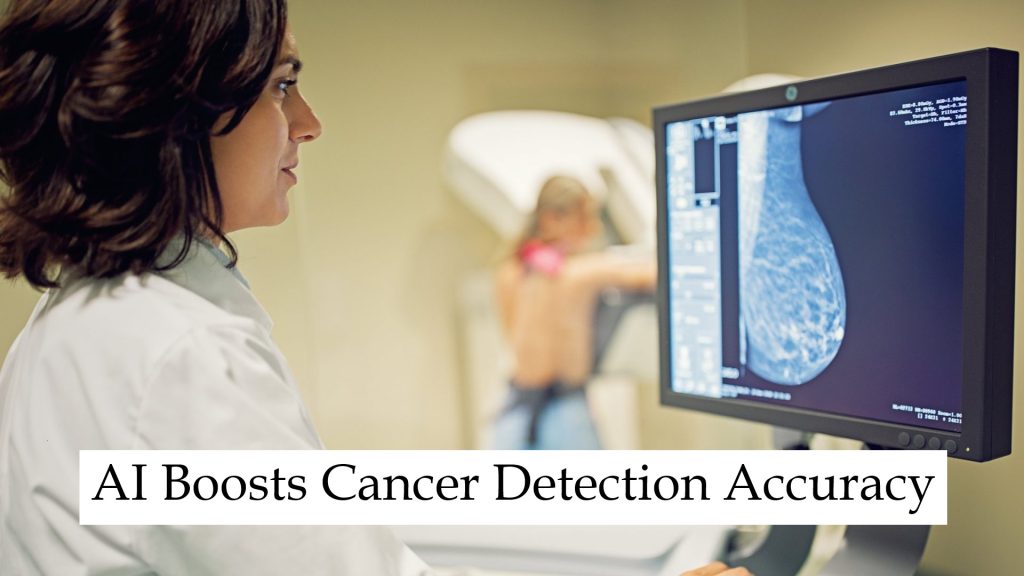
Breast cancer screening may be where AI impact feels the most tangible to everyday patients. Large Swedish trials using AI supported mammography found something remarkable. The rate of cancers diagnosed later between screening rounds dropped by about 12 percent.
That number is not abstract. It represents real people who avoid delayed diagnoses.
AI systems analyzed mammograms alongside human readers, flagging subtle patterns that are easy to overlook. The results showed:
• More cancers detected during routine screening
• Fewer interval cancers appearing months later
• No increase in unnecessary follow up anxiety
This matters because late diagnosed breast cancer often requires more aggressive treatment. Catching it earlier changes the entire care journey.
After a heart attack cancer care gets smarter
One of the most overlooked challenges in oncology is treating cancer patients who also have serious heart disease. After a heart attack, treatment decisions become complex. Chemotherapy or radiation can strain the heart, yet delaying cancer treatment carries its own risks.
A new AI driven clinical model developed in collaboration with academic hospitals helps doctors personalize treatment decisions in these cases. By analyzing patient history, cardiac risk, and cancer progression data, the system offers guidance that balances both threats.
Doctors describe this as decision support rather than automation. It helps answer questions like:
• Which cancer therapies pose the lowest cardiac risk
• When treatment can safely resume after a heart event
• How to prioritize interventions without guesswork
This kind of tool reflects a more mature phase of AI in medicine. It respects clinical judgment while enhancing it.
Why doctors are starting to trust these tools
Trust is everything in healthcare. AI earns it by being transparent, validated, and useful in real workflows. Several factors are driving clinician acceptance:
• Large scale studies instead of small demos
• Clear performance improvements rather than vague claims
• Seamless integration into existing imaging systems
Many radiologists and oncologists now describe AI as similar to autopilot in aviation. It does not fly the plane alone, but it reduces fatigue and catches issues early.
What this means for patients right now
If you are a patient or someone with a family history of cancer, this progress is genuinely encouraging. It suggests a near future where:
• Screenings are more reliable
• Early stage cancers are found more often
• Treatment plans are more personalized
You might not even know AI was involved. It will simply feel like better care.
That said, experts emphasize that AI is not magic. Access, regulation, and training still matter. Hospitals need infrastructure, and doctors need time to learn how to use these systems effectively.
The ethical and practical questions still ahead
No technological leap comes without concerns. Data privacy, algorithm bias, and over reliance are valid topics. Regulators and medical societies are actively working on guidelines to ensure AI is used safely.
One reassuring sign is that most current systems are designed as assistants rather than decision makers. Humans remain accountable.
Authoritative organizations like the World Health Organization have already outlined principles for ethical AI in healthcare.
The big picture where this trend is heading
Taken together, lung CT analysis, mammography screening, and post heart attack cancer care show a consistent pattern. AI is strongest where data is complex and time is limited. Imaging fits that perfectly.
It feels fair to say we are witnessing a quiet revolution. Not flashy robots or dramatic headlines, but steady measurable improvements that save time and lives.
You will love this update if you care about practical innovation. AI is no longer just promising better cancer care. It is delivering it.
What to expect next
Over the next few years, expect AI tools to become standard in screening programs and oncology departments. As models are trained on more diverse populations, performance should improve even further.
For patients, the takeaway is simple. Ask questions. Be informed. And know that behind the scenes, technology is working hard to help doctors catch cancer earlier and treat it smarter.