Artificial intelligence tools are evolving quickly, but few platforms are moving as aggressively as Microsoft Copilot. Over the past few months, Microsoft has been steadily expanding Copilot’s capabilities across its ecosystem, and the latest updates suggest something much bigger is happening.
From integrating AI agents directly into websites to helping organizations build automated workflows, Microsoft Copilot is no longer just an assistant inside Office apps. It is becoming a platform that businesses can use to create intelligent digital employees.
If you follow the latest AI developments, these updates are worth paying attention to. Microsoft’s strategy shows how AI will soon become a deeply embedded layer inside everyday software and digital experiences.
Here is what the newest Microsoft Copilot updates mean and why they could reshape how companies interact with customers and manage work.
Microsoft Copilot Is Moving Beyond a Simple AI Assistant
When Microsoft first introduced Copilot, many people saw it mainly as a productivity assistant that could help write emails, summarize documents, or generate content inside Microsoft 365.
That vision has now expanded significantly.
Microsoft is building an ecosystem where Copilot works alongside AI agents that can perform tasks, automate workflows, and interact with users across different platforms. These agents can answer questions, guide customers, and even complete complex business actions.
This shift is important because it moves Copilot from being a helpful tool to becoming an operational platform for businesses.
Instead of employees manually completing every task, companies can deploy intelligent agents that assist customers, manage data, and streamline operations in real time.
AI Agents Can Now Be Embedded Directly Into Websites
One of the most interesting announcements involves Power Pages, Microsoft’s low code platform for building secure websites.
Businesses can now embed Copilot Studio agents directly into their Power Pages sites. This means companies can place an AI powered assistant right inside their customer portals, service websites, or support pages.
For example, a visitor on a company website could ask questions about products, request help with an order, or navigate complex documentation without needing to contact support.
The Copilot agent can handle these interactions instantly.
This is more than a simple chatbot. These agents are designed to understand context, connect to company data, and guide users through tasks such as submitting requests or accessing services.
For businesses that manage high volumes of customer queries, this kind of automation could dramatically improve response times and customer satisfaction.
Copilot Studio Is Becoming a Hub for Building AI Agents
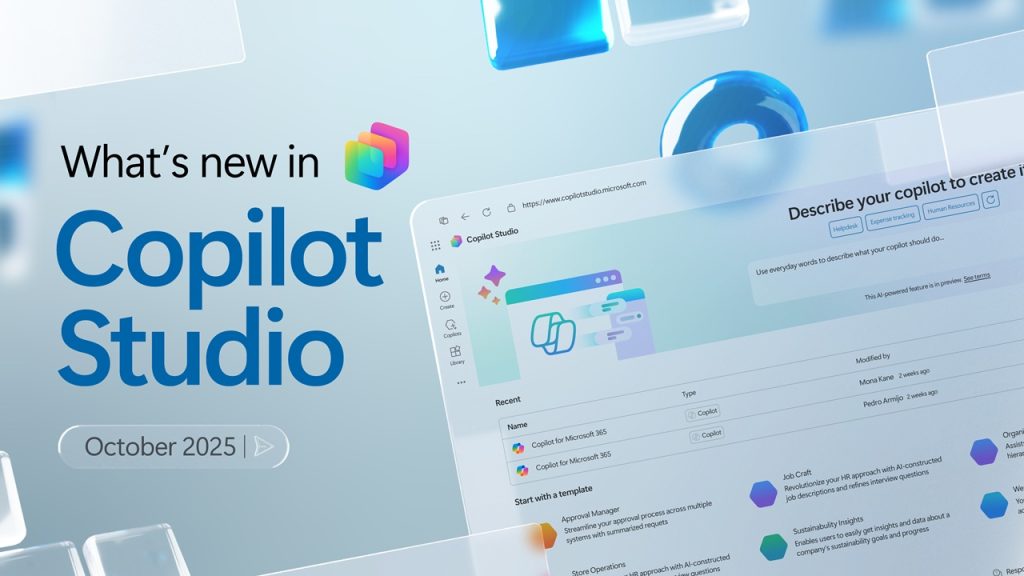
Another key development is the continued expansion of Microsoft Copilot Studio.
Copilot Studio allows organizations to design, customize, and deploy their own AI agents without needing advanced coding skills. Teams can build agents that integrate with internal data sources, business apps, and workflows.
What makes this platform powerful is its flexibility.
Companies can use Copilot Studio to create agents that perform tasks such as:
• Answering internal employee questions
• Automating customer support interactions
• Assisting with onboarding and training
• Guiding users through business processes
• Connecting with enterprise data systems
This means organizations can tailor AI assistants to their specific needs rather than relying on generic automation tools.
The ability to build specialized AI agents is becoming a major trend across the technology industry. Many experts believe agent based AI systems will define the next generation of digital productivity.
Microsoft Is Positioning Copilot for Enterprise Transformation
Microsoft’s long term goal is clear. The company wants Copilot to power what it calls “frontier transformation” inside modern organizations.
In simple terms, this means using AI to redesign how businesses operate.
Instead of employees spending hours searching for information or manually performing repetitive tasks, AI agents can handle large portions of the workload. Workers can then focus on strategic decision making and creative problem solving.
This approach could have major impacts across industries such as finance, healthcare, retail, and technology.
For example:
• Financial institutions can deploy AI agents to assist customers with account information and transactions.
• Healthcare organizations can help patients navigate services and access resources.
• Retail companies can create personalized digital shopping assistants.
• Technology companies can automate technical support systems.
Microsoft believes these intelligent agents will become a core layer of business infrastructure in the coming years.
Why AI Agents Could Become the Next Big Technology Shift
The rise of AI agents is not just a Microsoft trend. It reflects a broader transformation happening across the technology world.
AI tools are evolving from passive assistants into active participants that can take actions, communicate with systems, and complete tasks.
This concept is often referred to as “agentic AI.”
Instead of waiting for instructions, these systems can interpret goals and execute multi step processes to achieve them.
For example, an AI agent could:
• Analyze a customer question
• Retrieve relevant information from internal databases
• Generate a response
• Trigger a workflow such as submitting a request or updating records
That level of automation can dramatically reduce manual work.
Major tech companies including Google, OpenAI, and Salesforce are also investing heavily in agent based AI platforms. Microsoft’s approach stands out because it integrates these capabilities directly into widely used enterprise tools.
This gives Microsoft Copilot a major advantage since millions of businesses already rely on Microsoft software every day.
For deeper insights into how enterprise AI platforms are evolving, organizations like Gartner regularly analyze the growing role of AI agents in digital transformation. You can explore similar enterprise technology research on https://www.gartner.com.
Real World Impact for Businesses and Developers
The practical benefits of these updates are already becoming clear.
Developers and organizations can now use Copilot Studio to create AI agents that operate across websites, internal systems, and productivity tools.
This opens the door to several real world applications.
Customer service teams can deploy AI agents that resolve common support questions instantly.
HR departments can build assistants that guide employees through policies, benefits, and onboarding.
Sales teams can use AI agents to answer product questions and assist potential customers during online visits.
Even internal operations such as IT help desks can be automated with intelligent agents that diagnose problems and suggest solutions.
These improvements not only save time but also help companies deliver faster and more personalized experiences.
Microsoft’s AI Strategy Is Expanding Across Its Entire Ecosystem
One reason Microsoft Copilot continues to gain attention is how deeply it is integrated across Microsoft’s software ecosystem.
Copilot features now appear across tools such as:
• Microsoft 365
• Dynamics 365
• Power Platform
• Azure cloud services
• Windows and Edge
By connecting Copilot with these platforms, Microsoft is creating a unified AI layer that supports both employees and customers.
For organizations that already rely on Microsoft tools, adopting Copilot agents becomes much easier because the infrastructure is already in place.
This strategy could accelerate AI adoption in businesses that may have previously struggled with implementing advanced automation.
What the Future Could Look Like
Looking ahead, it is clear that Microsoft Copilot is evolving into something far more powerful than a productivity assistant.
It is becoming a platform for building intelligent digital coworkers.
Over time, businesses may rely on networks of AI agents that collaborate with human employees. Some agents may focus on customer interactions, while others handle internal workflows or analyze business data.
This hybrid model of human and AI collaboration could redefine workplace productivity.
The technology is still developing, but the direction is becoming clear.
AI will increasingly move from being a helpful feature to becoming a core part of how organizations operate.
Final Thoughts
The latest Microsoft Copilot updates show how quickly artificial intelligence is reshaping modern software.
By enabling organizations to build and deploy AI agents through Copilot Studio and embed them directly into websites with Power Pages, Microsoft is pushing AI deeper into everyday business operations.
For companies looking to improve efficiency, automate repetitive tasks, and provide better digital experiences, these tools offer a glimpse into the future of work.
The next few years will likely see a rapid expansion of AI agents across industries.
And if Microsoft’s strategy continues at this pace, Microsoft Copilot may soon become one of the most important platforms driving that transformation.