
Apple has made a move that did not arrive with fireworks but could quietly reshape the future of on device intelligence. The company has acquired Israeli audio and perception startup Q.ai and the implications stretch far beyond a simple talent grab. If you care about how your iPhone listens understands and reacts to you this is a story you will want to follow closely.
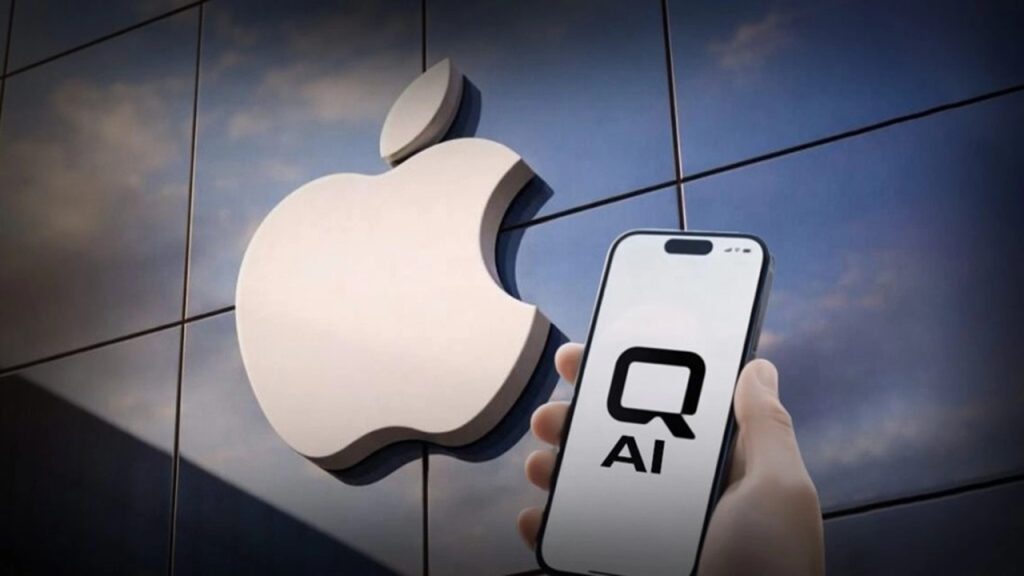
Why Apple’s Q.ai acquisition matters right now
The global AI race is heating up fast and Apple has often been criticized for moving more cautiously than rivals. This acquisition signals something different. With Q.ai Apple is doubling down on intelligence that lives directly on your device rather than in the cloud.
Q.ai specializes in advanced audio AI and perception systems that can interpret subtle cues in sound and human expression. Think tone of voice micro changes in speech patterns and even facial movement interpretation when paired with sensors. This aligns perfectly with Apple’s long standing focus on privacy first AI.
What stands out is timing. Apple is making this move as competitors push increasingly cloud dependent AI models. Apple appears to be betting that smarter local intelligence will win long term trust.
What exactly does Q.ai do
Q.ai is not a household name and that is part of why this deal feels so intriguing. The startup has been working on AI systems that understand human communication at a deeper level.
Core capabilities include
• Advanced audio processing that detects emotion intent and nuance
• AI models designed to run efficiently on device
• Perception tech that can interpret facial movements and subtle expressions
• Low latency intelligence built for real time response
This is not about flashy chatbots. It is about making machines understand humans more naturally and instantly.
How this fits Apple’s bigger AI strategy
Apple rarely buys companies without a clear long term plan. Q.ai fits into several strategic priorities at once.
First is on device intelligence. Apple wants AI that works even when you are offline. That means faster responses better privacy and lower dependence on cloud servers.
Second is privacy. By keeping sensitive audio and visual data on your device Apple avoids sending personal information to remote servers. This reinforces Apple’s public stance on user trust.
Third is ecosystem enhancement. Imagine Siri understanding not just your words but your mood. Imagine AirPods adjusting noise cancellation based on how stressed your voice sounds. These are not science fiction ideas anymore.
Apple has already been investing heavily in custom silicon and neural engines. Q.ai gives those chips smarter brains to run.
Real world features users could see next
This is where it gets exciting. While Apple has not announced specific products several possibilities feel very realistic.
• A more natural Siri that understands context tone and intent
• Smarter call and meeting features that adapt to conversation dynamics
• Improved accessibility tools for users with speech or hearing challenges
• Enhanced spatial audio and voice isolation in AirPods
• Emotion aware wellness features integrated into Health
You will love this update if you care about AI that feels helpful rather than intrusive.
Why Apple chose an Israeli startup
Israel has become a powerhouse for AI and signal processing research. Apple has quietly built a strong presence there over the years acquiring companies focused on chips cameras and perception tech.
Q.ai brings a team that understands both academic research and real world deployment. That balance is critical for Apple which values polish reliability and scale.
This also reflects a broader trend. The most impactful AI breakthroughs are increasingly coming from specialized teams rather than massive generalist labs.
How this impacts the wider AI race
Apple’s move puts subtle pressure on competitors. While others chase massive language models Apple is refining intelligence that lives close to the user.
This could influence how the industry thinks about AI deployment. Instead of asking how big a model can get the question becomes how smart and efficient it can be on a phone or wearable.
For consumers this is good news. It means faster AI fewer privacy compromises and features that feel more personal.
For developers it opens doors to new APIs and capabilities once Apple integrates Q.ai’s technology into its platforms.
Expert perspective on why this matters
From an industry standpoint this acquisition reinforces Apple’s identity. Apple is not trying to out chat everyone. It is trying to out understand.
Audio and perception are foundational layers of human interaction. Master those and everything built on top becomes more intuitive.
If Apple executes well Q.ai could become one of those invisible acquisitions that quietly power millions of devices without users ever knowing its name.
That is often where Apple does its best work.
External perspective on on device AI
For readers who want a deeper understanding of why on device AI matters the Apple Machine Learning Research portal offers valuable insight into how Apple approaches private and efficient intelligence
What to watch next
The real signals will come in future iOS and hardware updates. Watch for subtle changes in Siri responsiveness audio processing and accessibility features.
Apple rarely talks loudly about its AI roadmap. Instead it lets features speak for themselves.
This acquisition suggests those features are about to get a lot more human.
Final takeaway
Apple’s acquisition of Q.ai is not about headlines. It is about laying the groundwork for a smarter calmer more private AI experience.
If Apple succeeds this could mark a turning point where your devices stop just responding to commands and start understanding you.
And honestly that is the kind of AI future many people have been waiting for.